The safety of home birth has long been a topic of discussion in the world of pregnancy and birth. Recent studies show that home birth can be just as safe as alternative locations. Even still, midwives take measures, like fetal monitoring, to ensure the well-being of mom and baby during birth.
Fetal monitoring is used to keep an eye on the baby as birth progresses. The baby’s heart rate is checked in regular intervals to monitor changes in its pattern. A midwife can use this insight to make informed decisions about care.
What is Fetal Monitoring?
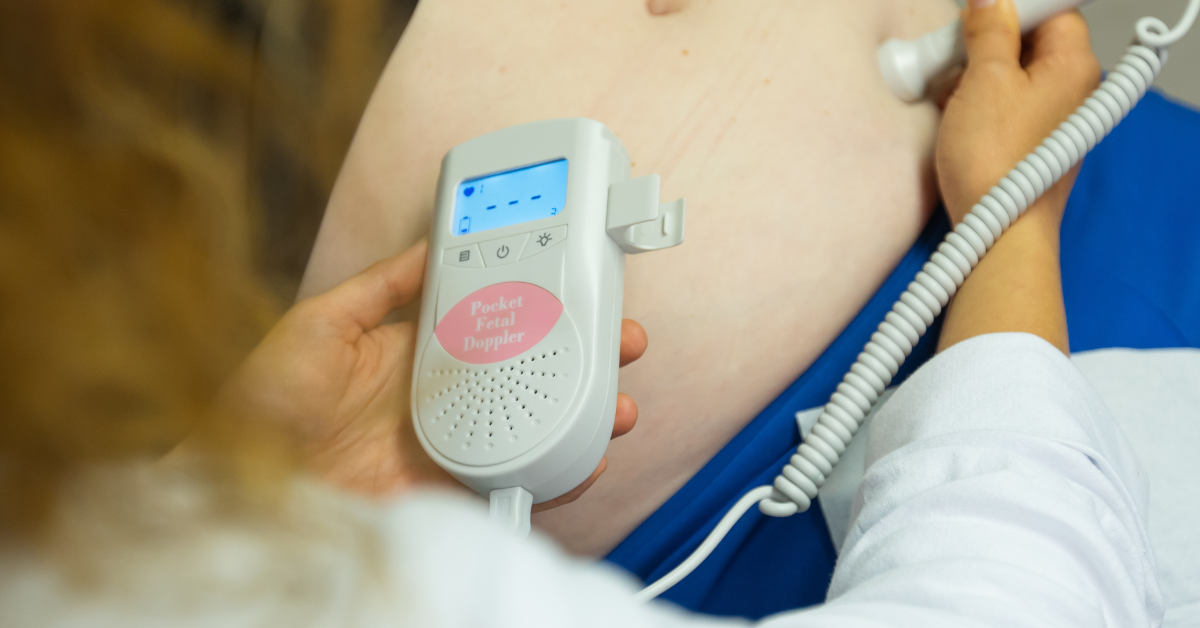
Fetal monitoring is the act of watching over the baby’s heart rate while they are still in the womb. Using a tool called a Doppler that gets gently placed on the mother’s stomach, practitioners can better assess the state of the baby as birth progresses.
As birth progresses, fetal monitoring is typically done intermittently rather than continuously. This approach is supported by research for low-risk pregnancies and allows the birthing parent to move freely, change positions, and labor comfortably.
How Midwives Monitor the Baby During Birth
During a home birth, a midwife listens to the baby’s heart rate at a regular interval. Midwives can observe patterns over time rather than relying on a single reading.
They have tools that assist them with checking in. These are handheld tools that don’t restrict the mother from movement. They are able to walk around, dance, and keep birth progressing through natural motion.
Monitoring usually occurs:
- At set intervals during early labor
- More frequently as labor progresses
- After contractions during active birth
What the Baby’s Heart Rate Can Tell Us
It’s normal for a baby’s heart rate to fluctuate throughout the stages of birth. These readings tell us how the baby is handling changes in contractions and the physical work of birth. By tracking these changes, a midwife is better able to advise on positioning, hydration, rest, and more.
Midwives are trained to recognize what is normal and what is a cause for concern, including:
- An abnormally high heart rate during pregnancy or birth
- Taking longer than expected to stabilize after contractions
- Irregular heart rate patterns
The Role of a Nurse-Midwife in Florida During Birth
Your certified midwife or certified nurse midwife is there to support you and guide you through birth. They oversee the birthing process with a deep respect for the body’s natural abilities, creating space for birth to unfold. This includes helping you explore and choose the type of birth that feels right for you, such as home birth planning, while prioritizing safety and trust.
Throughout birth, your midwife remains present. They coach on the birthing position, closely monitor mom and baby’s wellbeing, guide relaxation techniques, and offer natural pain management solutions. Above all, they advocate for your birth plan, honoring your wants while ensuring a safe and supported experience.
Welcome Motherhood in Peace with the Assistance of Midwife360
When supported by a trained midwife, fetal monitoring during a home birth is both gentle and effective. It allows for early insight, informed decisions, and peace of mind. For families seeking a balanced approach that prioritizes autonomy and holistic care, at-home birth with professional midwifery support can be a deeply empowering choice.