Pregnancy can feel like information overload. Between baby names, nursery plans, upcoming prenatal testing, and imagining your family’s future, your body is changing every week. And you’re expected to understand those changes while making sure you and your baby get the best care.
You don’t have to navigate it alone, though. One of the most grounding things you can do during pregnancy is understand the testing you might take part in, what it’s looking for, and what the results actually mean. That knowledge transforms appointments from something that happens to you into something you’re actively part of.
Working with a midwife adds another layer of support, so you don’t feel the need to go down misinformed internet rabbit holes. You get answers that are tailored to you.
General Monitoring During Pregnancy
Throughout pregnancy, your healthcare team tracks baseline information to understand your health and your baby’s development. Routine monitoring includes:
Vitals Check
At each appointment, your weight and blood pressure are measured. Gaining weight is normal, but significant deviations could indicate something needs attention.
Blood pressure monitoring is especially important. Conditions like preeclampsia, a serious but treatable high blood pressure complication, is diagnosed around the 20-week mark. Estimates suggest 5% to 8% of pregnancies are affected. Early detection allows for timely management.
Urinalysis
You may provide a urine sample at many visits. This quick test checks for protein, glucose, and infection. Protein in the urine could indicate preeclampsia, while glucose may signal blood sugar concerns. Urinalysis often catches issues before symptoms appear, giving your care team a chance to intervene early.
Fundal Height
Fundal height measures the distance from your pubic bone to the top of the uterus. It gives a rough estimate of fetal growth and can hint at potential concerns. For example, a measurement more than 3 centimeters above expected growth could potentially indicate excess amniotic fluid, a large baby, multiple gestation, or fetal macrosomia.
Fetal Heart Rate
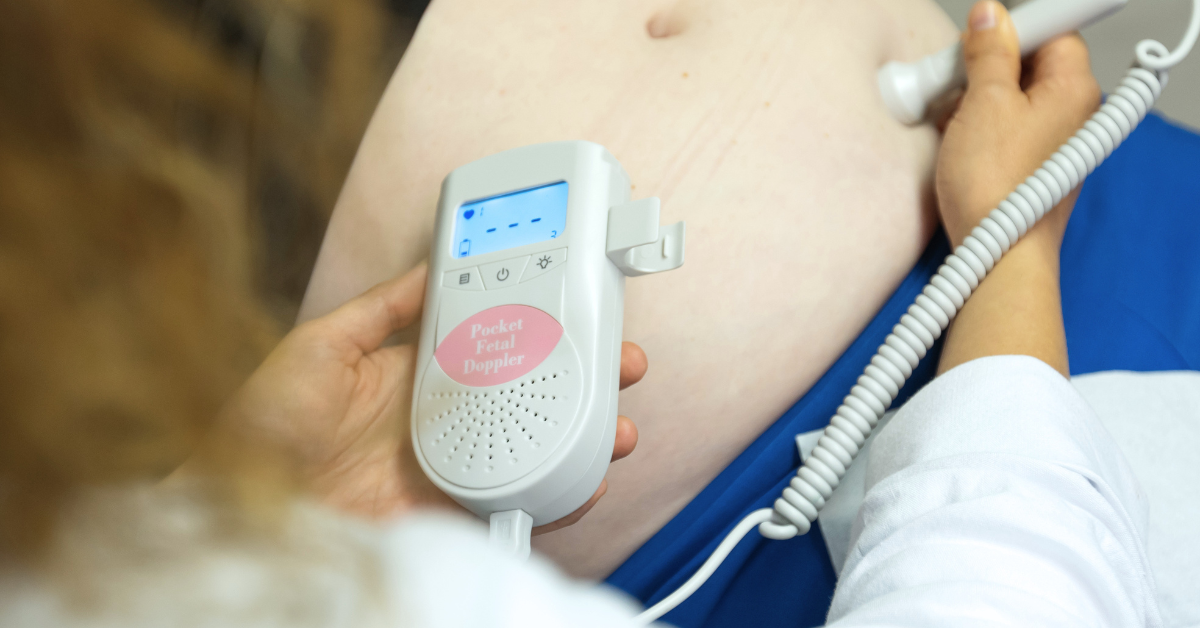
A baby’s heart rate in the womb generally ranges from 110 to 160 beats per minute. Healthcare providers use a handheld doppler to check it. Fluctuations at the different stages of pregnancy are normal, but persistent or extreme changes may require further investigation.
Fetal Movement
Feeling little butterfly kicks in your belly is so exciting! That type of movement can also be a telltale sign that your baby is happy and healthy. Fetal movement, including kicks, is one thing doctors will measure to understand how your baby is doing in utero.
What first feels like butterflies or bubbles can progress into jabs, rolls, or stretches. Activity is normal, and it’s important to pay attention to changes like going from frequent movement to none. Drastic changes in movement can be a sign that your baby is in distress and needs immediate attention.
First Trimester
The first trimester focuses on confirming the pregnancy, establishing your health baseline, and identifying potential risks. Early detection allows families to prepare and make informed choices.
Initial Bloodwork
Typically performed between 8 and 12 weeks, initial prenatal labs may include:
- Confirmation of pregnancy
- Screening for anemia and infections such as HIV or STDs
- Determining blood type and Rh factor
- Checking immunity to rubella and chickenpox
Nuchal Translucency (NT) Scan
The NT scan is an ultrasound performed between 11 and 13 weeks. It measures the fluid at the back of the baby’s neck. A thicker measurement can suggest higher risk for chromosomal conditions such as Down syndrome or Trisomy 18. This test is a screening, not a diagnosis, and any concerning findings are followed with further testing.
Non-Invasive Prenatal Testing (NIPT)
Non-Invasive Prenatal Testing (NIPT) is a safe, non-invasive blood test that can be done as early as 10 weeks into pregnancy. It analyzes small fragments of fetal DNA in the mother’s blood. It screens for certain chromosomal abnormalities, including conditions like Down syndrome.
NIPT is highly accurate for screening purposes, but it is not a diagnostic test, meaning any positive results should be confirmed with further testing. While it can be used on its own, many providers recommend combining NIPT with a Nuchal Translucency (NT) scan. This is because each test looks at your baby’s development in a different way.
Chorionic Villus Sampling (CVS)
Chorionic Villus Sampling, or CVS, is a diagnostic test available between 10 and 13 weeks of pregnancy. Unlike screenings such as NIPT or the NT scan, CVS gives you a confirmed answer rather than a risk assessment.
A small sample of tissue from the placenta is collected, either through the abdomen or cervix. It’s tested for chromosomal conditions like Down syndrome, Trisomy 18, and Trisomy 13. It is most commonly offered when a screening result comes back concerning, when there is a family history of a genetic condition, or when maternal age is a factor.
CVS is optional, and like any procedure, it comes with considerations. There is a small risk of pregnancy loss, estimated at around 0.5% to 1%. Some families choose CVS because an early, definitive answer helps them prepare. Others prefer to wait or skip diagnostic testing entirely. A midwife or genetic counselor can help you think it through, so whatever you decide, you feel confident in that choice.
Second Trimester
The second trimester focuses on tracking growth and development. You may notice more energy, less nausea, and the start of a visible baby bump. Meanwhile, your baby is developing fingerprints, organs, hair, and the ability to hear.
Anatomy Ultrasound
The anatomy ultrasound is a screening that many families look forward to because it can tell you your baby’s sex. Also known as the 20-week scan, it is done between 18 and 22 weeks of pregnancy. Like most other ultrasounds, it consists of a handheld tool performed by a sonographer and some (likely cold) jelly on the belly to facilitate being able to see the baby on a screen. They check for fetal growth and identify any abnormalities or causes for concern.
If you do not wish to know the sex of your baby, it’s important to express that during this appointment.
Multiple Marker/Quad Screen
This is another blood test done between 15 and 20 weeks of pregnancy. It is testing again for chromosomal abnormalities by examining specific hormone levels produced by the fetus and placenta. This test is not diagnostic, meaning any concerning findings require additional genetic testing.
Amniocentesis
Amniocentesis is a diagnostic test typically performed between 15 and 20 weeks of pregnancy. A thin needle is used to withdraw a small amount of amniotic fluid from the sac surrounding your baby. That fluid contains fetal cells that can be analyzed for chromosomal conditions such as Down syndrome, Trisomy 18, and Trisomy 13, as well as certain genetic disorders.
Like CVS, amniocentesis is diagnostic rather than a screening tool, meaning results are definitive. It is most commonly offered following abnormal screening results, for pregnancies with known genetic risk factors, or for mothers who are 35 or older. Amniocentesis carries a small risk of pregnancy loss, generally estimated at around 0.1% to 0.3% in experienced hands. It is always your choice whether to proceed.
Cervical Length Measurement
A cervical length measurement is an ultrasound assessment that checks the length of the cervix. It is typically performed between 16 and 24 weeks of pregnancy. A shorter cervix can indicate an increased risk of preterm labor, which is why this measurement is an important tool for providers managing higher-risk pregnancies.
The measurement is taken via transvaginal ultrasound, which may sound intimidating but is quick, safe, and generally painless. Not every pregnancy requires cervical length screening. It is most commonly recommended for women who have had a previous preterm birth, a prior cervical procedure, or other risk factors identified by their provider.
If a short cervix is detected, there are several interventions available. Early detection gives your care team the best opportunity to act.
Glucose (Gestational Diabetes Screening)
Gestational diabetes is a temporary elevation of a pregnant woman’s blood sugar. Pregnancy hormones create insulin resistance. This tends to show around the 24-to-28-week mark. If left unmanaged, it can lead to a very large baby which then increases chances of premature labor or needing a C-section.
To complete this screening, you will drink a sugary solution then wait an hour. Then, a blood sample will be taken for testing. If results come back positive for gestational diabetes, it can be managed with a balanced diet, close monitoring, and sometimes insulin or prescription medication.
Anemia
During your second trimester, your provider will likely repeat bloodwork to check your iron levels and determine if you have anemia. This is typically done with a simple blood draw and may be repeated later in pregnancy if needed. Mild anemia is fairly common in pregnancy due to increased blood volume, but more significant deficiencies require attention.
Iron plays a key role in delivering oxygen to both you and your baby. Low iron levels can leave you feeling fatigued, dizzy, or short of breath. In more severe cases, it may increase the risk of preterm delivery or low birth weight. If anemia is detected, your provider may recommend dietary changes or supplements to support healthy levels.
Third Trimester
As you enter the final stretch of pregnancy, testing becomes more focused on preparing for delivery and ensuring both you and your baby are in a safe position for birth. Monitoring may become more frequent as your due date approaches.
Non-Stress Test (NST)
A non-stress test, or NST, is a simple, non-invasive way to monitor your baby’s heart rate and movement in the third trimester. During the test, two sensors are placed on your abdomen, one to track fetal heart rate and one to detect any uterine contractions. You may be asked to press a button each time you feel your baby move.
The goal is to observe whether your baby’s heart rate rises appropriately with movement, which is a reassuring sign of healthy neurological function. NSTs are typically recommended starting around 28 weeks for pregnancies considered higher risk, including those involving gestational diabetes, hypertension, decreased fetal movement, or a post-term pregnancy.
The test usually takes between 20 and 40 minutes and is done in your healthcare provider’s office or a monitoring center. Results are described as reactive, meaning reassuring, or non-reactive, which may prompt further evaluation. A non-reactive result is not automatically cause for alarm, but it does indicate that additional testing is needed.
Biophysical Profile (BPP)
A biophysical profile, or BPP, combines an ultrasound with a non-stress test to get a fuller picture of how your baby is doing. It looks at five things: your baby’s breathing movements, body movement, muscle tone, amniotic fluid levels, and heart rate. Each is given a score, and together they help your provider assess your baby’s overall well-being.
A BPP is most often recommended for higher-risk pregnancies or when a non-stress test raises questions. It is simply another tool your care team uses to make sure you and your baby are in the best possible position heading into delivery.
Group B Strep
Between 36 and 37 weeks, your provider will perform a quick swab of the vaginal and rectal area to test for Group B Streptococcus (GBS). The test is simple, takes only a few seconds, and can often be done right in the exam room.
This test determines whether you carry GBS bacteria. It’s important to know that GBS is common and not something you “caused” or could have prevented. While GBS is typically harmless in adults, it can be passed to your baby during delivery and may cause serious infection in newborns. If you test positive, your care team will recommend antibiotics during labor to significantly reduce this risk.
Understanding Your Prenatal Testing Results & How They Inform Care
One of the most important things to remember is this: most prenatal tests are tools, not verdicts.
Many screenings are designed to assess risk, not provide a definitive diagnosis. That can feel frustrating or even anxiety-inducing, especially when results come back as “abnormal” or “positive.” But an abnormal result doesn’t mean something is wrong. It simply means your care team has more information to work with.
In many cases, a flagged result leads to a follow-up test that comes back completely reassuring. These screenings exist to make sure nothing gets missed, not to alarm you.
Working with a midwife throughout pregnancy gives you space to slow down and actually understand what your results mean for you. Instead of interpreting numbers or percentages on your own, you have someone who can walk you through your options. They’ll take the time to explain what’s worth paying attention to and what isn’t, helping you make informed decisions with greater confidence.
With Midwife360, this support goes even deeper. Through personalized pregnancy consulting, you’re not just receiving information, you’re getting context. Whether you’re navigating routine screenings or facing more complex situations like a breech pregnancy, you have an experienced guide helping you interpret what’s happening.
What Does Virtual Pregnancy Consulting Include at Midwife360
Virtual pregnancy consulting with Midwife360 is designed to meet you exactly where you are in pregnancy. We do not replace your primary provider. Rather, we provide additional support, giving you the time and space to ask questions, air concerns, and get educated answers specific to your situation.
Here’s what that support can look like:
Breaking down test results in plain, understandable language
No more trying to decode medical terminology or spiraling after reading a lab report. You’ll get clear, personalized explanations of what your results actually mean and what they don’t.
Understanding how different tests work together
Prenatal testing isn’t one-size-fits-all. Midwife360 helps you see the bigger picture of how each test contributes a different piece of information about your baby’s development.
Knowing when further testing is necessary and when it may not be
Not every “abnormal” result requires immediate action. You’ll be guided through what’s truly worth following up on, what’s precautionary, and what can simply be monitored.
Feeling confident advocating for yourself within a traditional medical setting
Appointments with healthcare providers can feel rushed, and it’s easy to leave with unanswered questions. With the right preparation and understanding, you can walk into every visit feeling empowered to ask questions, explore options, and make decisions that align with your values.
Instead of defaulting to worst-case scenarios or getting lost in online searches, you have a trusted resource who can help you filter through the noise and focus on what actually matters for your pregnancy.
Experience Pregnancy and Prenatal Testing with Calm Confidence
Pregnancy is a profound experience for both you and your family. It can bring excitement, uncertainty, and many questions. Having a guide who listens to your body and respects your intuition can make all the difference.
With Midwife360’s virtual pregnancy consulting, support is available wherever you are. Our midwife takes a holistic approach, combining natural, body-centered care with evidence-based guidance. They help you interpret test results, understand your body’s signals, and make decisions that honor your health and values.
Virtual consulting means you don’t have to travel or search endlessly online for answers. You have a trusted partner who listens, explains, and supports you every step of the way. With Midwife360, pregnancy is more than appointments and tests. It’s a journey you experience with clarity, awareness, and calm confidence.