
You’re sitting in the exam room at your 37-week appointment, close enough to birth that everything is starting to feel very real. You’ve been imagining meeting your baby, thinking about labor, picturing how these final weeks might unfold. Then your care provider tells you that your baby is still breech, and they’re recommending an External Cephalic Version, or ECV, to try to turn your baby head-down.
Suddenly, your mind is full of questions. Is my baby okay? Is this procedure safe? Will it hurt? What happens if it works? What happens if it doesn’t? In a moment that you thought might feel routine, you’re now trying to understand a new option, protect your peace, and make the best decision for your body and your baby as birth approaches.
At Midwife360, our goal is for mothers and families to feel empowered, informed, and supported as you navigate this next step in your pregnancy. If an external cephalic version has been recommended, our goal is to help you understand what it means, why it may be offered, and what options are available to you and your baby. We believe that informed decision-making begins with compassionate education, open conversation, and care that honors your intuition as well as your clinical needs.
You deserve to feel confident asking questions, exploring the benefits and risks, and making the choice that feels safest and most aligned for your body, your baby, and your birth experience.
Why is My Baby Breech?
Most babies move often throughout pregnancy and typically begin to settle into a head-down position between 32 and 36 weeks. Sometimes, though, a baby remains bottom- or feet-first as the due date approaches, and there may not be one clear reason why. Breech positioning can be more common when there is more or less amniotic fluid, when the uterus has a unique shape, when the placenta is positioned in a certain way, with multiples, or if you have had previous pregnancies. Often, a breech baby is simply a variation of how your baby has found comfort in your womb. It is not your fault, and it does not mean your body has failed. It simply means you and your care team may need to explore your options with extra awareness, compassion, and support.
Reasons why your baby is breech in this stage of your pregnancy might include:
- The baby is comfortable
- You’re having twins
- This is not your first pregnancy
- There is either too little or too much amniotic fluid
- You have an irregularly shaped uterus
- The placenta is covering all or part of your cervix
As pregnancy moves closer to birth, babies have less room to make big movements on their own. In the earlier weeks, your baby may flip, stretch, and change positions often, but toward the end of pregnancy, space becomes more limited, and it can be harder for a breech baby to turn head-down without support. This is where an external cephalic version may be offered.
During an ECV, a trained care provider uses hands-on pressure from the outside of your belly to gently encourage your baby into a head-down birthing position. For some families, this can create more possibilities for labor and birth while helping baby move into a position that is the most common for vaginal delivery.
What is an External Cephalic Version (ECV)?
An External Cephalic Version (ECV) is an external technique that rotates your baby from a breech position to a head-down position. Since the head-down position is ideal for vaginal birth, an external cephalic version procedure is typically recommended if a baby is still in the breech position toward the end of a pregnancy.
During the ECV, Fadwah places her hands on the outside of your belly and applies firm, guided pressure to encourage your baby to roll into a head-down position. Some people feel pressure or slight discomfort during the process, while others tolerate it well. The procedure itself is usually brief, and your care team will stop if there are concerns about you, your baby, or how your body is responding.
Is An ECV Safe?
Yes, an ECV procedure is generally safe. Studies show an average of 60% success rate for ECV. Still, while there’s very little risk involved, it is possible to experience:
- Fetal distress
- Preterm labor
- Vaginal bleeding
- Placental abruption
- Premature rupture of the membranes (PROM)
That said, serious complications from an ECV are uncommon. Throughout the entire procedure, Fadwah and our team will be watching your baby closely and checking in with you every step of the way. If anything feels off, the procedure stops. You are never left to navigate that moment alone.
Does It Hurt to Get an ECV?
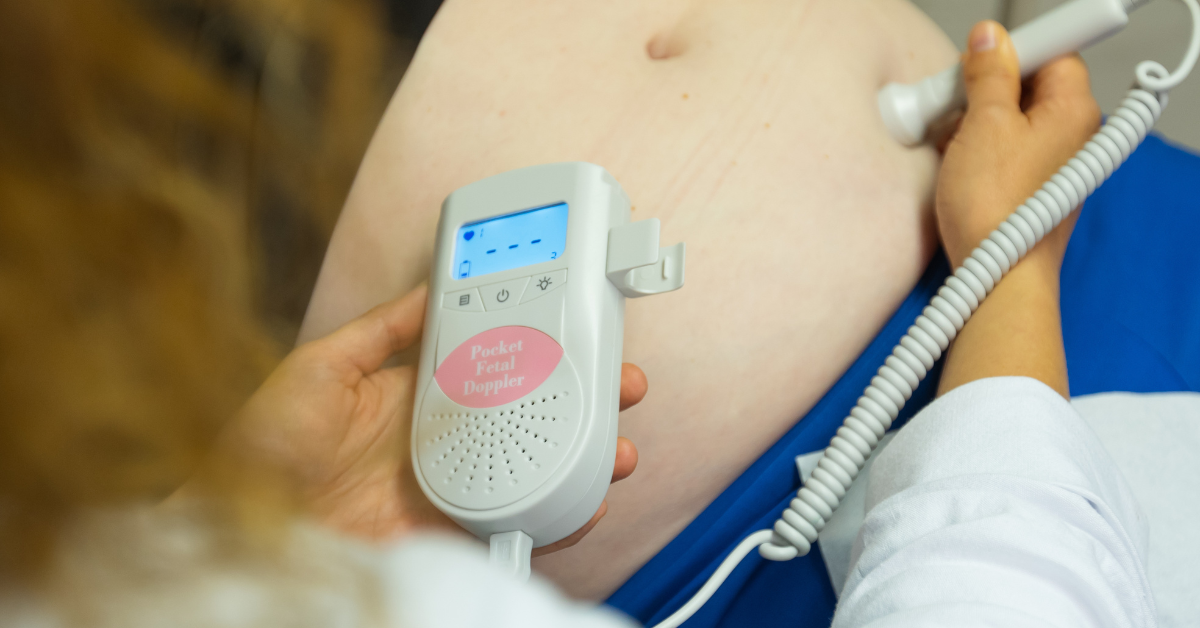
An ECV procedure can feel uncomfortable. Our midwife will use her hands to apply steady pressure on your belly and gently guide your baby into a head-down position. Your baby’s heart rate will be monitored the entire time, and she will stop if there are any concerns.
What Happens If The ECV Does Not Work?
If an external cephalic version doesn’t turn your baby and it stays breech, we can guide you through your options. In most cases, the baby will be born via C-section. Our midwife will walk you through what that process looks like and help you understand what to expect.
While this may not have been the birth experience you originally planned, knowing your options and having support around you can make a meaningful difference in how you feel going into it.
A certified nurse midwife can be a steady, calming presence during this time. Whether it means helping you process the shift in your birth plan, preparing your body and mind for a cesarean, or simply being someone who listens without rushing you, that support matters. You still have a voice in your care, and your experience still deserves to be treated with intention and respect.
Supporting You Every Step of the Way
No matter how your pregnancy unfolds, you deserve to feel supported, informed, and genuinely cared for throughout the entire journey. That is exactly what we are here for.
At Midwife360, our certified nurse midwife, Fadwah Halaby, walks beside you through every moment. If you are navigating a breech presentation, preparing for an ECV, or processing a shift in your birth plan, we are here to help you understand your options, prepare your body, and feel grounded in your decisions.
You do not have to have everything figured out. You just need someone in your corner who truly listens and cares. Reach out to us at (561) 705-1022 or submit a form on our website to learn more about how we can support your pregnancy care journey.